Alibaba rolled out Wan 3.0 on August 24, 2026, days after closing a roughly $10 billion share sale in Hong Kong. The model had been in public beta since August 6, running on Alibaba Cloud Model Studio and Qwen Cloud.
If you only read the headline number — 30 seconds — you miss most of what changed.
We spent the last few days wiring Wan 3.0 into our own generator, which meant reading the API contract line by line instead of the launch copy. This is what we found: the parts that hold up, the one capability no competing model ships, a pricing detail that caught us out, and the thing Alibaba quietly did not do this time.
What shipped on August 24
Wan 3.0 is the newest generation of Tongyi Wanxiang, the video family from Alibaba's Tongyi Lab. It replaces the previous lineup of task-specific models with one model behind one endpoint — text, images, video, audio and documents all enter through the same door.
Wan 3.0 core specifications
The headline specs, per Alibaba Cloud:
- Up to 30 seconds of video in a single generation
- 1080p maximum output, with audio generated in the same pass — no 4K tier shipped
- Reference inputs spanning images, video clips, audio clips, office documents and web pages
Four Wan 3.0 input modes
Underneath that, Wan 3.0 exposes four ways to start a shot:
- Text to video — a prompt alone, up to 20,000 characters of it
- First frame — an image that fixes the opening composition
- First and last frame — a pair, when the shot has to land on a specific image
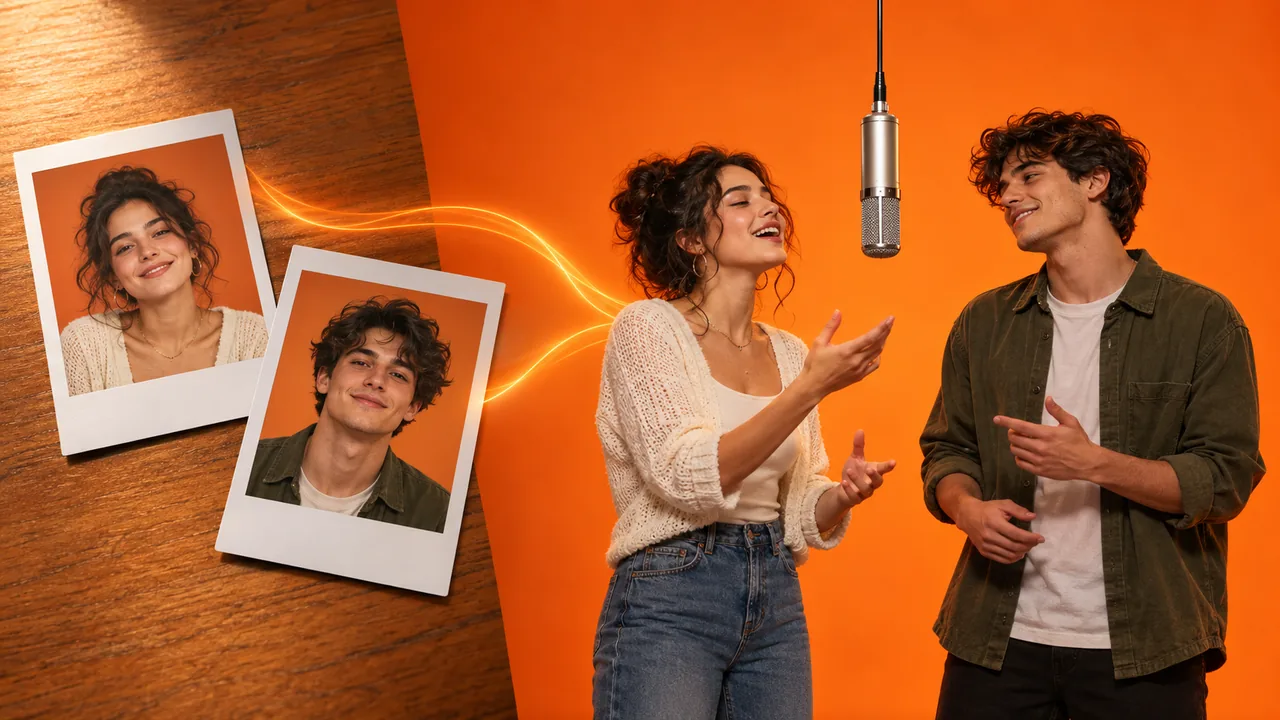
- Reference to video — a mixed set of images, clips and audio the model holds consistent
Access today runs through Alibaba Cloud Model Studio and Qwen Cloud, with third-party providers such as fal and Kie carrying the model onward to downstream apps.
Thirty seconds matters less than "single pass"
The interesting word in "30-second video" is not 30. It is single.
Why stitched AI video clips drift
Most video models hand back four to ten seconds. To reach the half-minute Wan 3.0 does in one go, you generate several clips and cut them together — and stitched shots drift. Each clip is sampled independently, so the model has no shared memory of what it just made. In practice you get:
- Lighting jumps. Each segment forms its own idea of exposure and white balance, so the room warms or cools at every cut.
- Identity drift. Face shape, hairline and skin tone shift between segments because there is no global latent identity spanning the whole shot.
- Wardrobe changes. A navy jacket re-renders as black. A logo on a t-shirt quietly disappears.
- Geometry resets. Furniture moves. A window changes proportion. The camera height is silently renegotiated.
- Motion resets. Walk cycles restart mid-stride, gestures snap back, smoke and water begin again from nothing.
What single-pass generation changes
Wan 3.0 holds one representation of the scene across the full window instead. Lighting, wardrobe, geometry and camera path propagate through every frame, and because audio is produced in the same pass it shares a temporal grid with the picture — footsteps land on footfalls rather than drifting a few frames out.
That is the real upgrade. Thirty seconds of continuous footage is a different product from thirty seconds of assembled footage, and it is the difference between a shot that can carry a beat and one that can only carry a hook.
Everything-to-video: the omni-reference system
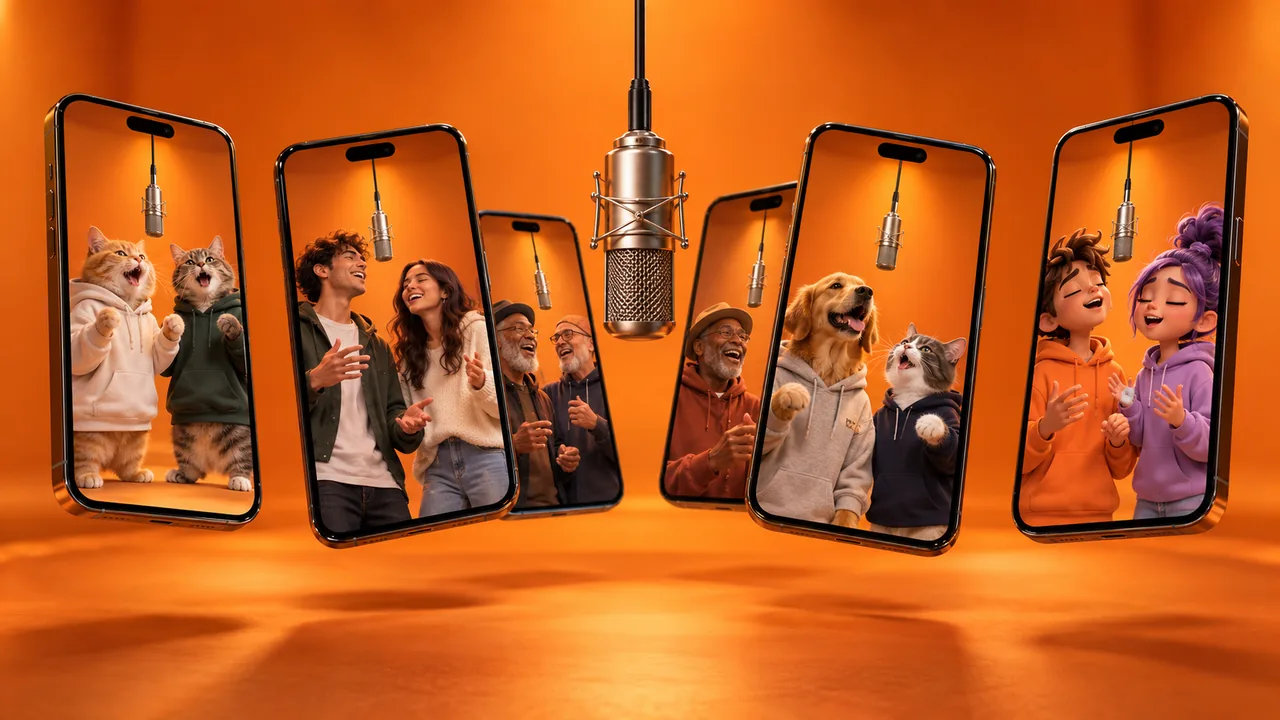
Wan 3.0's second structural change is what Alibaba calls omni-reference. A single request accepts up to 10 reference images, 5 reference video clips and 5 reference audio clips, held consistent across the generated shot.
Addressable image, video and audio references
What makes Wan 3.0's version of this usable rather than merely impressive is that references are addressable. You number them in the prompt — "Image 1 walks past the counter in Image 3, moving the way Video 1 moves" — and the model assigns each reference a role. That is how you keep one face, one package, one storefront recognizable across a series of shots instead of re-rolling a prompt and hoping.
Wan 3.0 reference limits
Wiring Wan 3.0 up ourselves, the ceilings the API enforced were: reference video capped at 15 seconds in total, reference audio likewise, and prompts up to 20,000 characters. Frame inputs and omni-references are mutually exclusive — a generation takes a first/last frame pair or a reference set, never both.
Document-to-video is the feature nobody else ships
Supported documents and web inputs
This is the genuinely unusual one. Wan 3.0 accepts an office document or a public web page as the source material and builds a video from its contents — one file of up to 100 MB and 50 pages, across formats including DOC, XLS, PPT, PDF, TXT and Markdown.
Point Wan 3.0 at a product deck and it reads the deck. Point it at a URL and it reads the page.
No competing frontier video model documents this as a first-class input. It is also a tell about who Alibaba is selling to: text-to-video is a creator feature, but deck-to-video is an enterprise feature, aimed at the marketing team that already has the slides and does not have a video budget.
What document-to-video does not do
Worth being precise about what this is not. It is not a general-purpose "turn my 50-page report into a documentary" button — you still get a clip of at most 30 seconds, so the model is compressing a document into a short visual summary, not narrating it end to end.
What Wan 3.0 costs — and the billing detail we hit
Wan 3.0 pricing by resolution
Alibaba's published rates on Model Studio are $0.05 per second at 480p, $0.10 at 720p and $0.20 at 1080p.
Priced per second, that lands Wan 3.0 among the cheaper frontier options. A full 30-second take at 1080p runs about $6.00; the same length at 480p is $1.50. For iteration that spread matters more than the absolute figures.
Concretely: say you need one finished 20-second spot and expect to burn eight attempts finding the right take. Draft all eight at 480p and you have spent $8.00, then the winning re-run at 1080p costs $4.00 — $12.00 all in. Draft the same eight at 1080p and you have spent $32.00 for an identical final clip. The resolution picker is the single biggest lever on what a Wan 3.0 project costs, and it is the one most people leave on maximum.
How Wan 3.0 bills reference video
The detail that caught us out is structural, and you only notice it if you have priced more than one model. Wan 3.0 publishes one rate per resolution. Seedance 2.5, which we also run, publishes two — a lower per-second rate when a reference video is present, because it bills across the reference clip's seconds plus the generated clip's. A single Wan rate means the reference footage is not on the invoice; you pay for output seconds only.
There is a related constraint that is easy to trip over: when you supply reference video, the reference and the output share one 30-second budget. Hand Wan 3.0 a 15-second reference clip and the longest video you can ask for is 15 seconds, not 30. We enforce that before a job is submitted rather than after the credits are spent.
The open-weights question Alibaba has not answered
Here is what nobody put in a press release. Wan 2.1 and Wan 2.2 were released as open-weight models — downloadable, runnable locally, the foundation of a large community ecosystem of fine-tunes and workflows.
Hosted access is the only confirmed route
As of publication, no Wan 3.0 weights have appeared on Hugging Face, GitHub or ModelScope. Every confirmed route to the model is hosted: Model Studio, Qwen Cloud, and API resellers on top of them.
Alibaba has not said the weights are coming, and has not said they aren't. Both readings are available — a staged release where hosted access comes first, or a strategic shift now that the model is a commercial product with an enterprise story attached. Anyone building on Wan 3.0 today should plan for hosted-only access and treat local weights as upside rather than a roadmap item.
Where Wan 3.0 comes up short
Two honest limitations.
No 4K output
Resolution tops out at 1080p. Despite pre-launch speculation about a 4K tier, none shipped. Sora 2 and Veo 3.1 are both described as 4K-capable, so if final delivery resolution is your binding constraint, Wan 3.0 is not the tool.
Thirty seconds is still one shot
Thirty seconds is a ceiling, not a floor. It is a real advance over stitching, but it is still a shot, not a scene. Anything longer than half a minute still means generating multiple takes and cutting them — with all the drift problems described above waiting at each cut.
Trying Wan 3.0
Wan 3.0 is the most interesting video release of the month, and not because it wins any single benchmark. It doesn't. It wins on shape: one continuous take instead of a stitch, one model instead of a lineup, and an input list that reaches into file formats no rival accepts.
If you want to see how it handles your own material, you can run Wan 3.0 in the browser on Flowlio AI — text, first and last frame, or a full reference set, with the credit cost shown before each run. Start at 480p, find the take that works, then spend the resolution on the one that survived.
Written by Adrian Cole, founder of Flowlio AI, from firsthand integration work against the Wan 3.0 API. Specifications reflect the model as of August 25, 2026 and may change during public beta.